Smart Glasses and Working at Height: How Wearable Technology Is Digitising Safer, Hands-Free Operations
How smart glasses are digitising work at height: hands-free inspection, remote expert guidance, and digital workflows for safer, more efficient operations.
Introduction
Falls from height remain the single largest cause of workplace fatalities in the United Kingdom. In 2024/25, 35 workers lost their lives following a fall from height, representing over a quarter of all work-related deaths. These are not abstract statistics. They represent people who went to work and did not come home.
The legal framework is well established. The Work at Height Regulations 2005 set out clear obligations around planning, competence, risk assessment, and equipment selection. Most organisations working at height understand what they need to do. The challenge is not awareness. It is execution.
Specifically: how do you equip someone to work safely, efficiently, and compliantly when their Risk Assessment and Method Statement demands both hands on the structure, the ladder, or the safety line? How do they document what they find, reference a technical standard, or get expert input without letting go?
This article explores how smart glasses and wearable technology are providing a practical answer to that question, and how the digitisation of work at height operations is delivering measurable benefits to both the workforce and the organisations that employ them.
The Equipment Gap: When Safety and Productivity Compete
Every organisation that sends people to work at height follows a familiar process. The risk assessment is written. The method statement is prepared. The team is briefed. Equipment is checked. Then the worker climbs.
At that point, something important happens: the worker is expected to carry out their actual task while maintaining their own safety. They may need to inspect a surface, photograph a defect, reference a specification, confirm a measurement, or describe a finding to a colleague on the ground. Traditionally, this means a clipboard, a phone, a printed method statement, or a two-way radio.
The problem is obvious. If your RAMS states that the worker must maintain both hands on the structure for safety, none of those tools are compatible with that requirement. The worker is forced to choose: comply with the safety requirement and stop working, or keep working and compromise the control measure.
This is not a training issue or a behaviour issue. It is an equipment issue. The Work at Height Regulations require employers to select equipment that is suitable for the task, the conditions, and the worker. If the task requires hands-free operation and the equipment provided does not allow it, the equipment selection is incomplete.
Smart Glasses: Closing the Gap
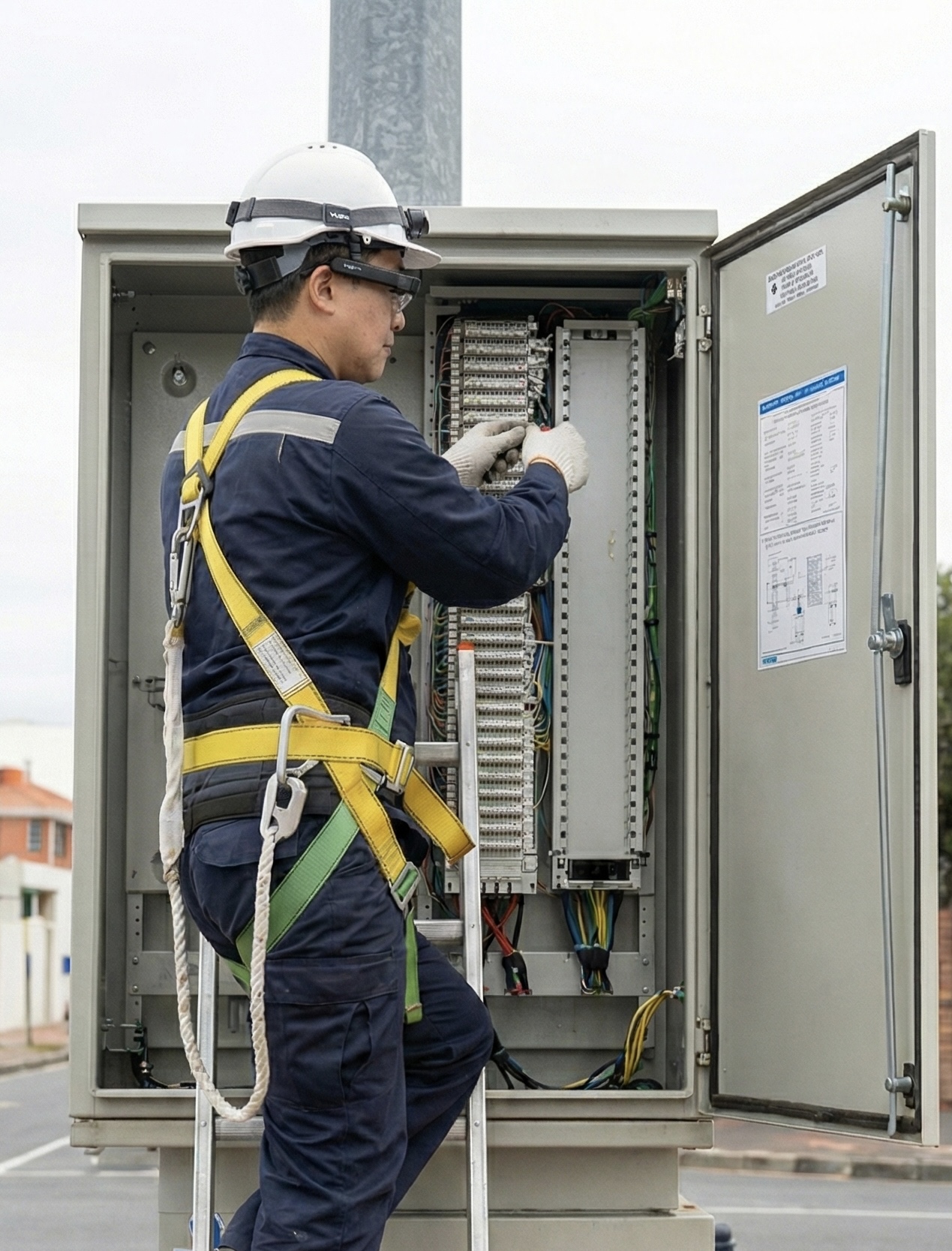
Enterprise smart glasses such as the Vuzix M400 are purpose-built for professional field use. Worn like a pair of safety glasses or attached to a hard hat, they provide a small heads-up display in the wearer's line of sight without obstructing their vision. They are rugged, lightweight, and designed for extended use in demanding environments.
The critical advantage for work at height is straightforward: the worker keeps both hands free at all times. There is no device to hold, no screen to look down at, and no need to stop work to reference a document or capture a photograph. The technology sits passively until needed, then responds to voice commands or touch controls on the device frame.
Smart glasses are not a single-purpose device. They support a combination of capabilities that, taken together, fundamentally change how a person works at height. Net4Connect delivers these through a managed solution combining hardware, software, and connectivity.
Three Capabilities That Transform Work at Height
1. Remote Expert: See What They See, Guide What They Do
Remote Expert software creates a live, two-way video connection between the worker at height and a specialist, supervisor, or safety officer located anywhere. The expert sees exactly what the wearer sees through the integrated camera. They can speak directly to the wearer, annotate the live feed to highlight areas of concern, and capture images or recordings for documentation.
This is not a phone call where neither party can see what the other is describing. It is a shared visual workspace with full audio, delivered entirely hands-free. A less experienced worker can be guided through a complex task by a senior expert without that expert needing to travel to site. The guidance is live, visual, and documented.
In practice, this looks like:
A roofing contractor on a pitched roof with a senior surveyor guiding them through a condition assessment remotely, identifying defects and verifying compliance in real time.
A telecoms rigger installing antenna equipment on a mast, with an RF engineer providing live commissioning guidance without climbing the structure.
A wind turbine blade technician performing a structural repair at 80 metres, guided step by step by a composites specialist reviewing the damage in real time.
A steeplejack inspecting an industrial chimney, with a structural engineer reviewing crack patterns and recommending remedial action without attending site.
An overhead line engineer performing pole-top maintenance, with a senior authorised engineer supervising the work remotely and verifying safe isolation procedures.
A fall protection installer commissioning a new guardrail or lifeline system, with the design engineer confirming correct installation against the specification.
On-site safety coaching and training, with a trainer observing technique and correcting errors in real time from a safe location on the ground or off-site entirely.
2. Digital Workflow: Follow the Method Statement, Hands-Free
Digital workflow applications running on smart glasses guide the worker through a structured sequence of tasks. Rather than relying on memory or a printed method statement tucked into a pocket, the worker follows step-by-step instructions displayed in their line of sight. Each step can require confirmation before progressing. Photographs, voice notes, and timestamps are captured automatically at each stage.
This addresses one of the most common weaknesses in work at height operations: consistency. A well-written RAMS is only as effective as the worker's ability to follow it accurately in the field. When conditions are difficult, when weather is poor, when the worker is focused on maintaining their position safely, it is easy to miss a step or skip a check.
Digital workflow removes that variability. The process is the same every time, regardless of the worker, the site, or the conditions. And because every step is recorded, the organisation has a complete audit trail showing that the method statement was followed as written.
Typical applications include:
Pre-use equipment inspection checklists for harnesses, lanyards, and anchor points, completed hands-free with photographic evidence at each stage.
Roof condition surveys following a standardised methodology, ensuring every area is assessed and documented consistently.
Tower inspection routines capturing structural condition, corrosion, bolt integrity, and lightning protection status in a repeatable format.
Installation verification workflows confirming that each component of a safety system has been fitted and tested to specification.
3. AI-Powered Document Access: Ask a Question, Get an Answer
Perhaps the most significant recent advancement in wearable technology for field workers is the ability to retrieve technical information by voice. AI-powered document access allows a worker to ask a question in natural language and receive an answer drawn from the organisation's own technical library: British Standards, manufacturer specifications, method statements, risk assessments, and historical inspection records.
This is not a simple keyword search. Modern AI can interpret context, understand technical terminology, and return precisely the relevant section of a document. A roofer standing on a scaffold platform can ask, "What is the minimum lap for underlay on a 22-degree pitch?" and receive the answer from BS 5534 without touching a device, opening a folder, or scrolling through a PDF.
For organisations, this capability transforms the relationship between documentation and field execution. Standards and specifications that currently sit in filing cabinets or on shared drives become accessible at the point of work. The gap between what the method statement says and what the worker can practically reference in the field closes entirely.
Practical examples include:
Instant access to equipment specifications during installation, confirming torque values, clearance requirements, or load ratings without descending to ground level.
Retrieval of previous inspection reports for a specific asset, allowing the worker to compare current condition with historical records whilst on the structure.
Access to RAMS documents for the current task, presented as voice-readable summaries rather than multi-page printouts.
Cross-referencing regulatory requirements during compliance inspections, verifying that installed systems meet the relevant standard or manufacturer guidance.
Why Digitising Work at Height Matters for Organisations
The safety case for smart glasses is clear, but the operational benefits extend well beyond keeping people safe. Organisations that digitise their field operations through wearable technology consistently report improvements across several key areas.
Fewer Truck Rolls, Better Expert Utilisation
When a senior engineer can guide three site visits in a single morning without leaving the office, the economics change fundamentally. Travel costs fall, expert utilisation rises, and response times to site issues shrink from days to minutes. For organisations with geographically dispersed assets or small specialist teams, this shift is transformative.
Faster Knowledge Transfer in a Shrinking Workforce
The UK construction and infrastructure sectors face a well-documented skills shortage. Over a third of construction workers are aged over 50, and the Engineering Construction Industry Training Board predicts nearly 20% of the UK engineering workforce will have retired by 2026. Smart glasses accelerate the training cycle by allowing less experienced workers to learn on the job with expert oversight. Every guided session is a training session. Every recorded inspection becomes a reference for future workers.
Complete, Automatic Audit Trails
Paper-based records are vulnerable to loss, damage, inconsistency, and delay. Digital records captured through smart glasses are timestamped, geotagged, and stored securely. They include photographs, video, voice annotations, and workflow completion data. In the event of an HSE investigation, an insurance claim, or a client dispute, this level of documentation provides clear, verifiable evidence that work was carried out correctly and in line with the RAMS.
Improved First-Time Fix Rates
When a worker at height can consult an expert, reference a specification, and verify their work against the method statement in real time, errors are caught before they become problems. The job is done right the first time. Return visits are reduced. Equipment downtime is minimised. Client satisfaction improves.
Voice Control: The Interface That Makes It All Practical
The advancement that makes all of this work for height operations is voice control. Smart glasses respond to spoken commands. The worker does not need to tap a screen, press a button, or navigate a menu. They speak, and the system responds.
This is not a novelty. It is a fundamental operational requirement. A worker clipped into a fall arrest system on a pitched roof cannot safely use a touchscreen. A rigger suspended on a tower cannot scroll through a PDF. Voice is the only practical interface when both hands are occupied and the working environment demands full physical attention.
Voice-driven data capture also eliminates the common bottleneck of post-task reporting. Rather than returning to the office to type up notes, complete forms, and upload photographs, the worker captures everything in real time as part of the task itself. Notes are spoken, photographs are taken by voice command, and workflow steps are confirmed verbally. By the time the worker descends from the structure, the report is already complete.
For organisations, this means faster turnaround on inspection reports, fewer administrative hours spent on paperwork, and a significant reduction in the time between field activity and management visibility.
The Net4Connect Solution
Net4Connect provides a complete managed solution for organisations looking to equip their field teams with smart glasses technology. The solution is designed to be simple to deploy, easy to use, and fully supported from day one.
The Starter Pack
The Net4Connect Remote Expert Starter Pack includes everything needed to get started: Vuzix M400 smart glasses, Remote Expert software (expert and device licences for 12 months), ArborXR device management software for secure remote configuration and kiosk mode, a portable MiFi hotspot with unlimited UK data connectivity for 12 months, and a choice of wear options including safety glasses, headband, bump cap, and hard hat adaptors. The pack is priced at £2,400 + VAT and includes guided onboarding support.
Beyond Remote Expert
While Remote Expert is the most immediately understood capability, Net4Connect also supports the deployment of digital workflow applications and AI-powered document access on the same device. This means a single pair of smart glasses can serve multiple functions: live expert guidance when needed, structured workflow execution for routine tasks, and instant access to technical documentation at any time. The device adapts to the task rather than the task adapting to the device.
Device Management and Security
ArborXR device management ensures smart glasses are professionally managed, secure, and simple for field workers to use. Kiosk mode means the device opens directly into the required application. There are no settings to adjust, no apps to navigate, and no risk of misconfiguration. For the worker, the device is a tool: they put it on and it works. For IT, it is a managed asset with remote update, monitoring, and support capabilities.
Who Is This For?
Smart glasses technology is relevant to any organisation whose workers carry out tasks at height. The following sectors represent areas where the combination of hands-free operation, remote expert guidance, digital workflow, and voice-driven data access delivers the greatest value.
Fall Protection and Safety Equipment
Companies that manufacture, supply, install, and inspect fall protection systems. Remote expert guidance supports installation verification, inspection certification, and distributor training across multiple sites without specialist travel.
Roofing and Building Envelope
Commercial and industrial roofing contractors carrying out inspections, installations, and repairs. Smart glasses enable hands-free condition surveys, standards verification, and real-time guidance on complex repairs without compromising fall protection.
Telecommunications and Tower Infrastructure
Telecoms riggers, mast builders, and antenna installers working on structures from 20 metres to over 300 metres. Remote expert capability allows RF engineers, structural specialists, and commissioning experts to support tower crews without climbing.
Wind Energy
Onshore and offshore wind turbine technicians performing maintenance, blade inspection, and component replacement. Technicians benefit from remote composites expertise, OEM guidance, and structured maintenance workflows executed entirely hands-free.
Overhead Lines and Utility Networks
Linesmen and overhead line engineers working on wood poles and steel towers across distribution and transmission networks. Remote supervision by senior authorised engineers supports safe working practices and real-time fault diagnosis.
Steeplejack and Lightning Protection
Steeplejacks carrying out chimney inspection, structural repair, and lightning protection installation. Remote expert guidance enables structural engineers and lightning protection designers to supervise work without attending site.
Rope Access and Industrial Inspection
IRATA-certified rope access technicians performing NDT inspection, fabric maintenance, and coating work. Smart glasses allow specialists and project managers to review findings in real time and make decisions without waiting for post-site reporting.
Facade Access and Building Maintenance
BMU operators and rope access teams maintaining high-rise building facades. Remote expert support assists with complex access equipment operation, structural assessment, and quality verification of repair work.
Conclusion: Better Equipment for the Task
Every organisation working at height writes risk assessments and method statements. Every one of them specifies the equipment their workers need. But for most, that equipment list stops at the physical safety gear: the harness, the guardrail, the scaffold.
What is often missing is the operational equipment that lets the worker actually do their job whilst staying safe. Smart glasses fill that gap. They keep both hands free. They connect the worker to expert guidance. They digitise the workflow. They provide instant access to the documentation that matters.
The combination of remote expert guidance, digital workflow, and AI-powered document access delivers measurable benefits: reduced specialist travel, faster knowledge transfer, complete audit trails, improved first-time fix rates, and a genuine improvement in the safety and confidence of the worker at height.
For organisations operating in any of the sectors described in this article, the question is worth asking: when your RAMS says both hands must stay on the structure, what equipment have you given your worker to do their job?
References
1. HSE, "Work-related fatal injuries in Great Britain, 2025" (provisional), July 2025. hse.gov.uk/statistics/fatals-overview.htm
2. The Work at Height Regulations 2005, SI 2005/735. legislation.gov.uk/uksi/2005/735/contents
3. HSE, "The law: Working at height." hse.gov.uk/work-at-height/the-law.htm
4. HSE, "Health and Safety in Roof Work" (HSG33)
5. HSE, "Kinds of accident statistics 2024/25." hse.gov.uk/statistics/assets/docs/kinds-of-accident.pdf
6. ECITB, "Engineering Workforce Retirement Forecasts." theengineeringtrust.org/employer/skills-gap/
7. PFP Thrive / University of Cambridge, "The UK Construction Skills Shortage Report 2025"
8. CITB, "Workforce Skills and Mobility in the Construction Sector 2022"
Find Out More
To learn more about the Net4Connect Remote Expert Starter Pack, request a demonstration, or discuss how smart glasses can support your work at height operations, contact us:
Web: net4connect.com
Email: [email protected]